
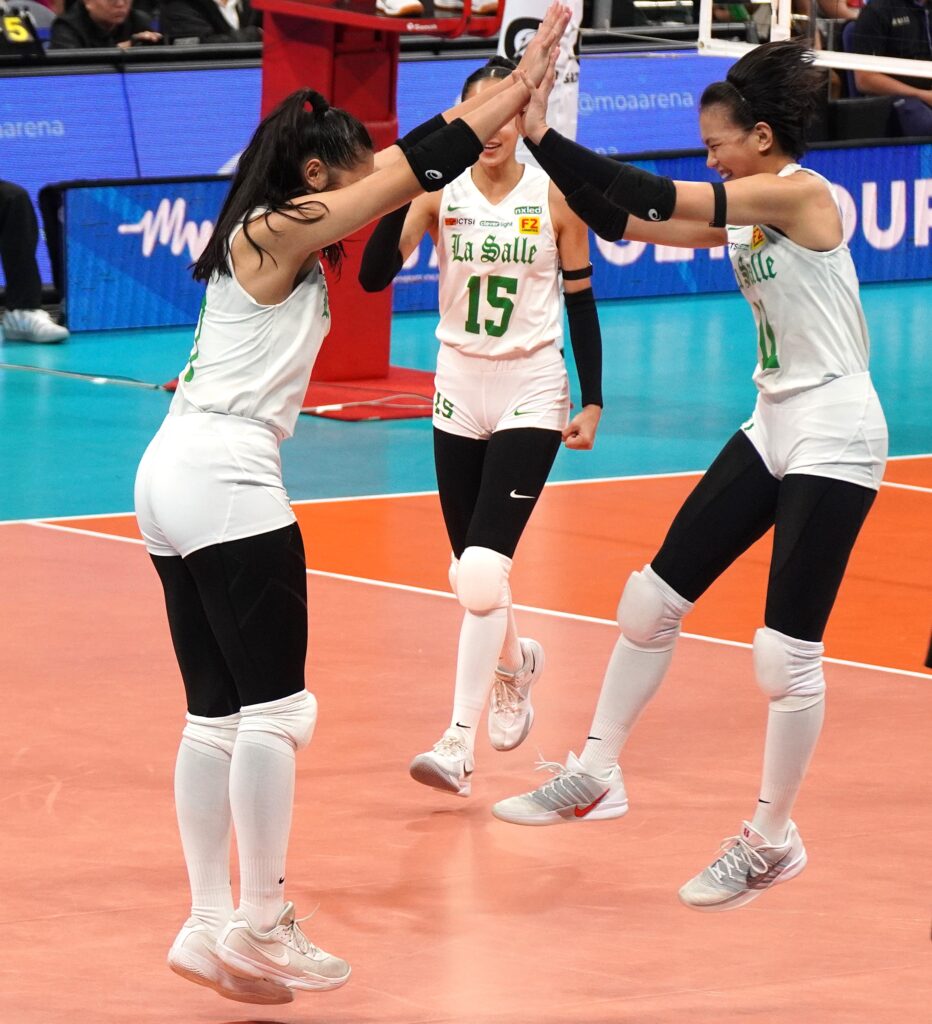
The thing about this La Salle run is… it doesn’t feel like a run.
Runs imply hiccups. Variance. A little bit of luck riding shotgun.
This?
This feels engineered.
Seven games, seven wins, and not in the coin-flip, “we survived another one” kind of way. More like… every match starts to tilt in the same direction, slowly at first, then all at once. And by the time you realize what’s happening, La Salle is already walking to the service line with control of the set.
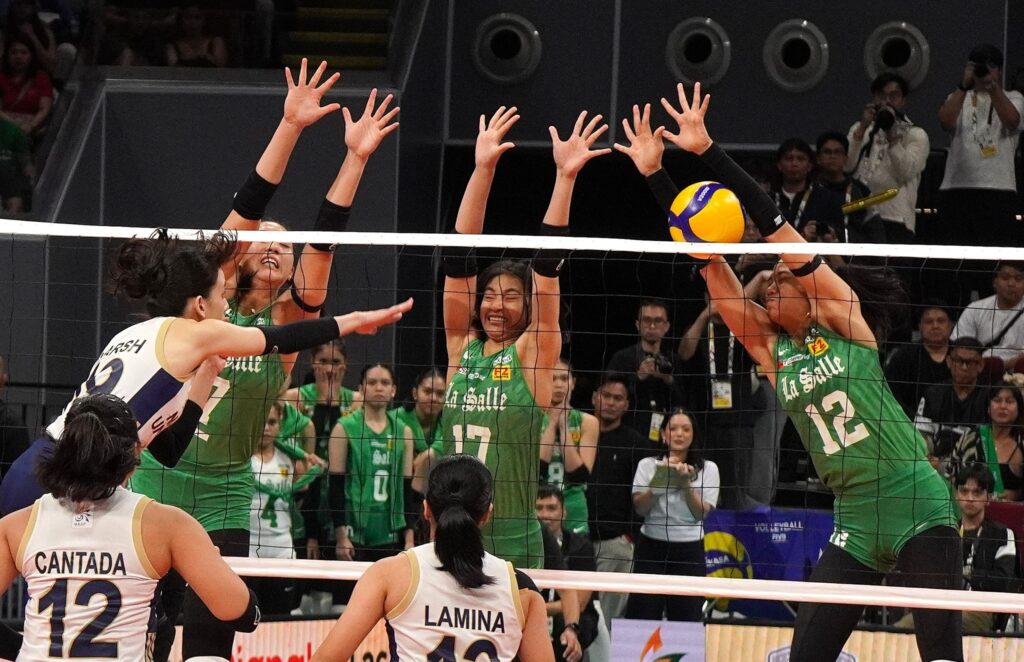
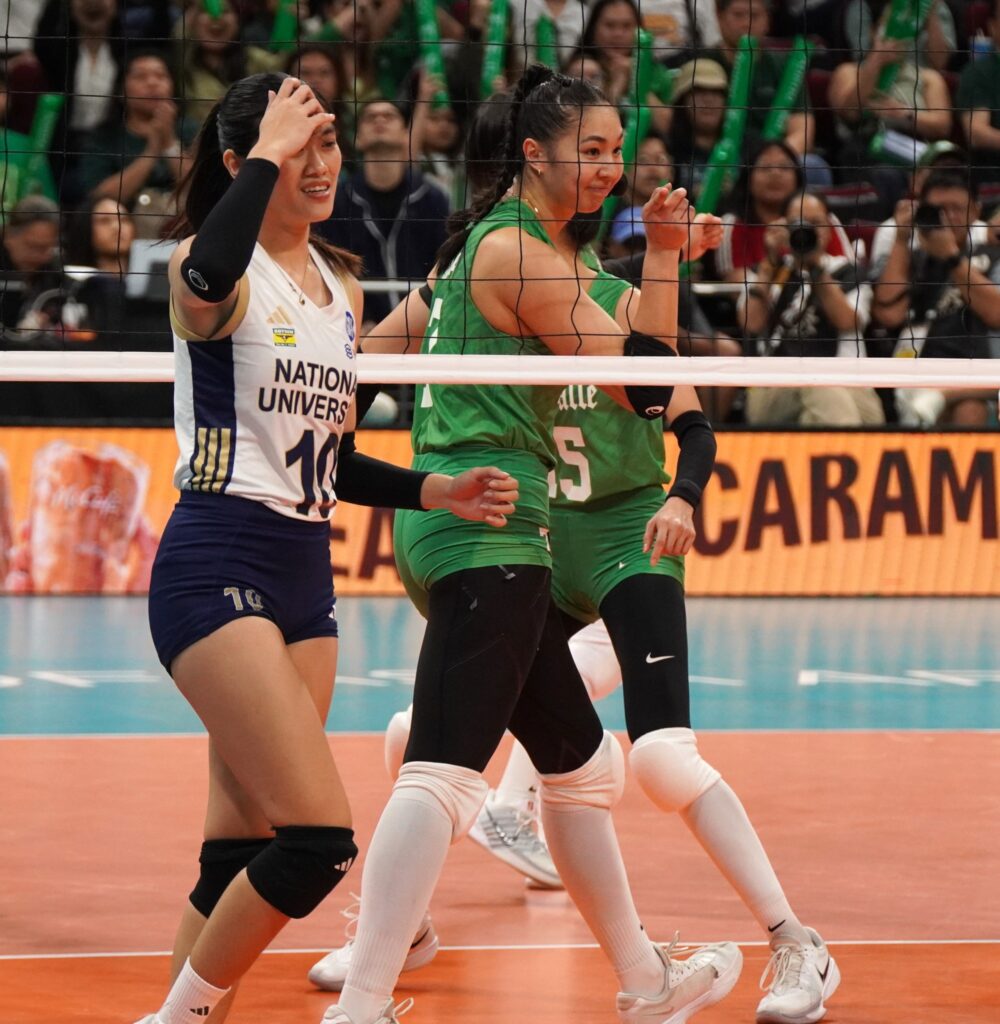
That NU game, against the very team that toppled DLSU last season—on paper, it’s just another four-set win.
But if you watched it, really watched it, it felt like a passing of something.
Because last year, NU had the cheat code.
Belen. Solomon. Alinsug as the backup spiker. Pick your poison, live with the consequences.
Now?
La Salle’s the one dealing from that deck.
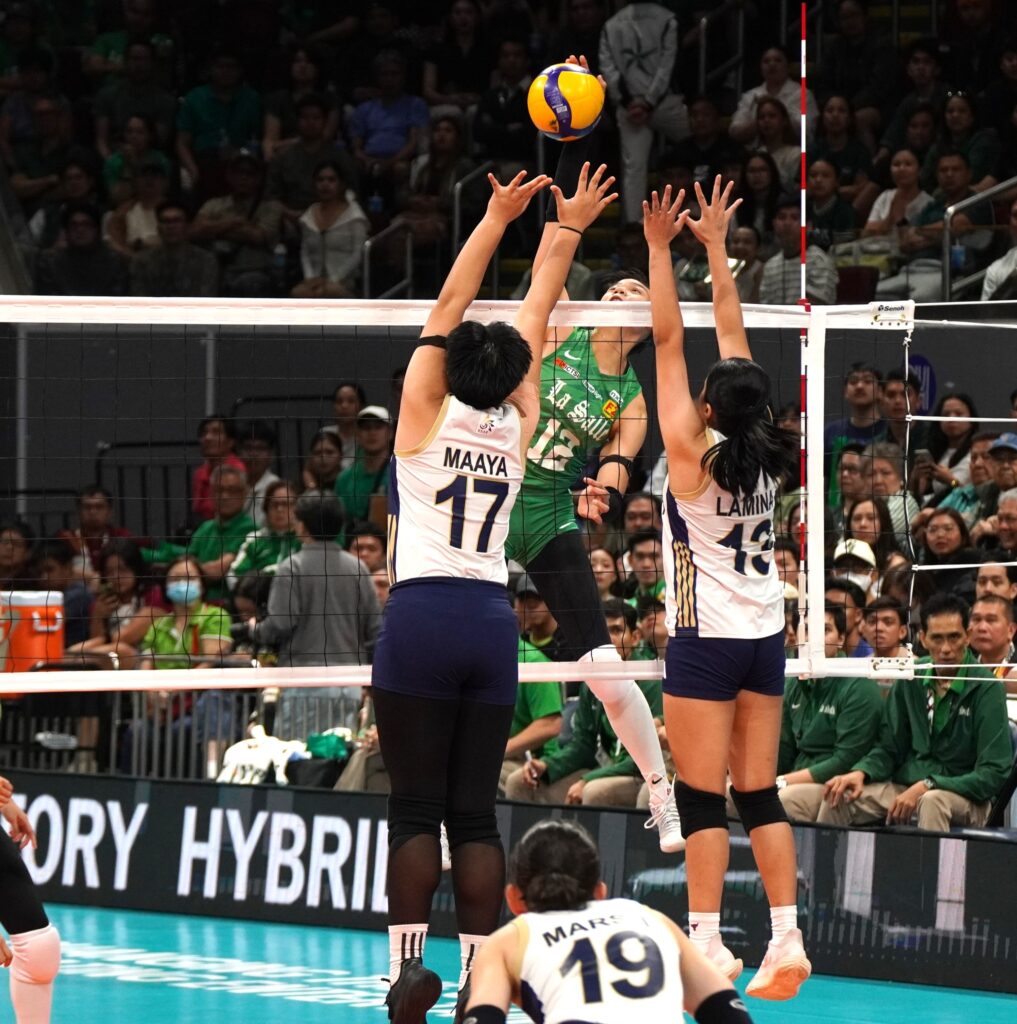
Angel Canino plays like she’s solving something in real time—angles, timing, hands. There’s a kind of patience to her scoring that doesn’t feel passive. It’s probing. She’ll take the long rally, recycle the ball, wait for the seam to show itself, then slip through it like she’s been there the whole time.
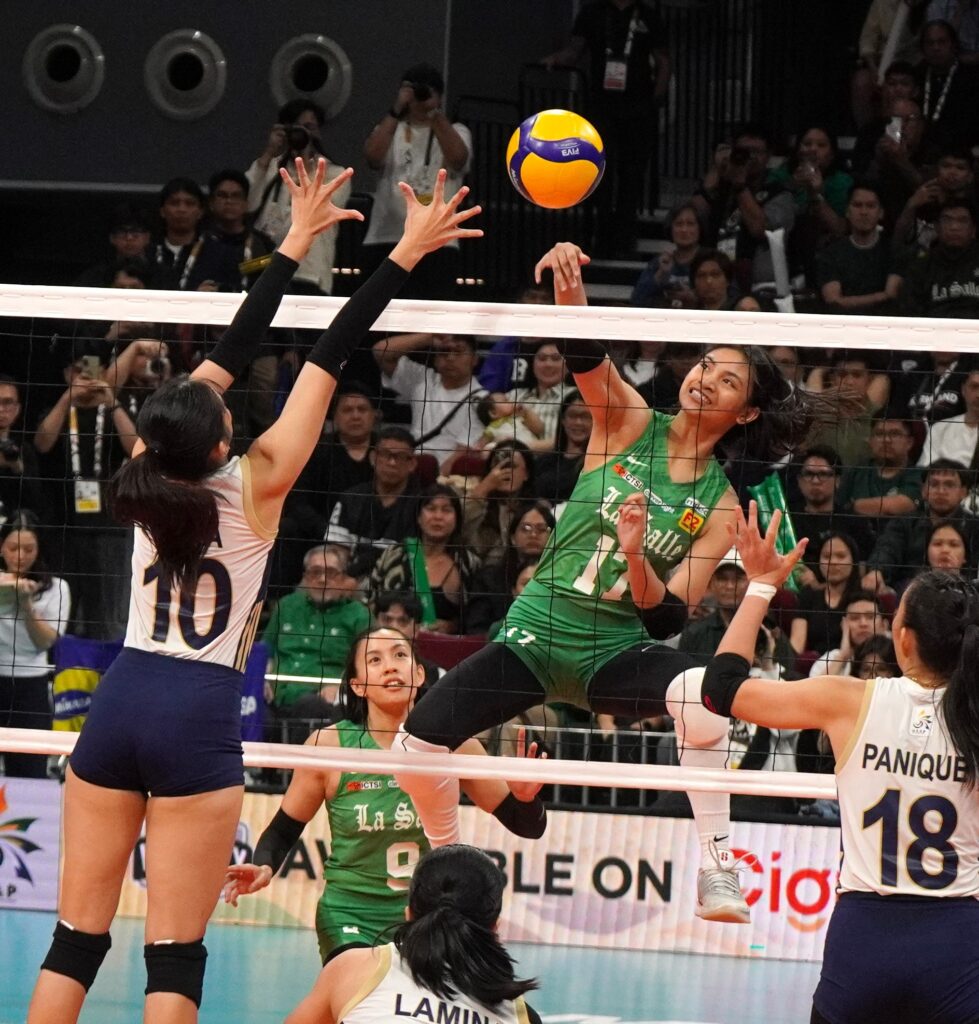
Most of the time, attacking OVER the defense.
And then there’s Shevanna Laput, who doesn’t really believe in subtlety.
Her game is often a punctuation mark.
High, early, above the block—contact that sounds different. You don’t need the stat sheet to tell you it’s working. You can hear it. You can feel the defense react half a beat late, like they already know they’re not getting there.
Two different languages.
Same sentence.
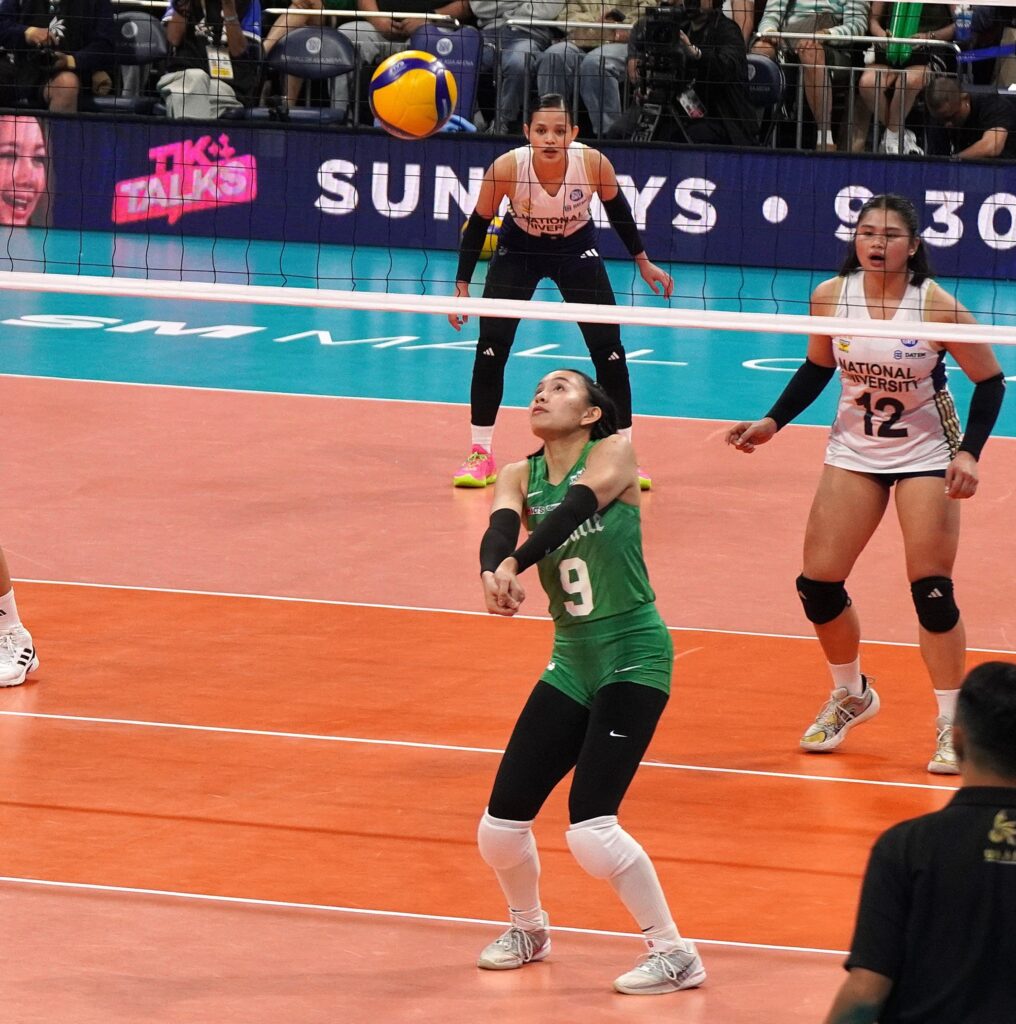
But the part that keeps sticking with me is the tempo.
This season’s top setter, Shan Shan Nunag doesn’t just set the ball—she changes the speed of the game.
There’s this microsecond window in volleyball where defenses are still organizing, still reading, still deciding. Nunag lives in that small dimension. The ball is snapped out of her hands before the block is fully formed, before the floor defense has settled into shape.
And suddenly everything looks… rushed.
Not for La Salle.
For everyone else, who are scrambling just to defend.
Coach Ramil said it straight: “Mabilis mag-set ang bata. Mautak. Madiskarte”
And yeah, the league-pacing numbers say 5.44 excellent sets per frame—barely a jump from last year. But that’s not the story. The story is how those sets arrive. Early. On time. Sometimes before time.
It’s like watching a drummer who’s just slightly ahead of the beat—but in a way that pulls the whole band forward.
Then you flip to the other side of the ball, and it gets a little uncomfortable if you’re the opponent.
Because La Salle doesn’t just score.
They violently snatch things away.
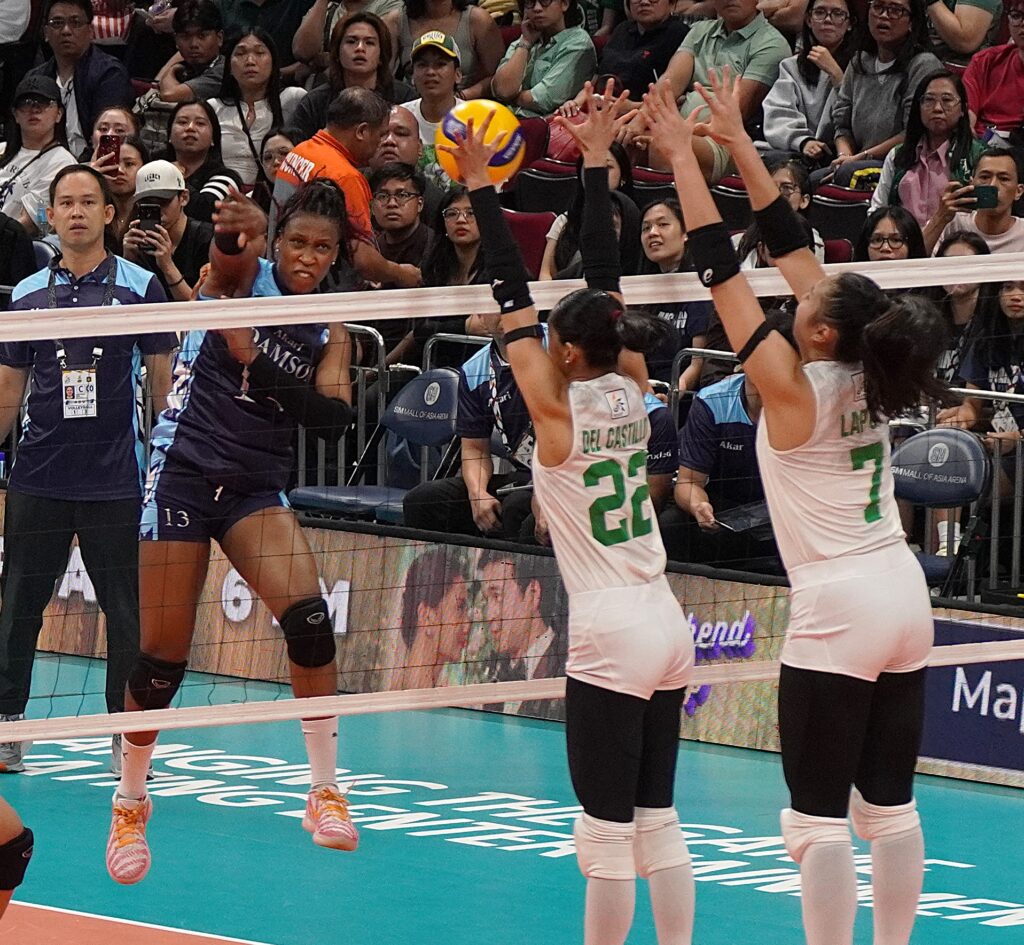
The block numbers jump off the page—3.16 per set—but even that undersells it. It’s not just about stuffing the ball. It’s about shaping where the ball can go.
Lilay Del Castillo has turned into that kind of presence. The Ateneo game—eight blocks—it almost felt like she was suffocating the Eagles in real time. See it once, adjust. See it twice, close it.
And she’s not alone in the air up there.
Laput + Provido. Length + timing + hands that don’t drift.
It’s less “wall” and more… shifting geometry.
You look up, think you have a seam, and then it’s gone.
What’s interesting is that they haven’t really been tested in the way we usually think about contenders.
Adamson pushed them to five, sure. And for a second, it may have looked messy. But up close, La Salle was in control.
But then the fifth set happens.
15–5.
And it’s not frantic. It’s not desperate. It’s just… clinical.
Like they figured out the equation mid-match, erased the board, and rewrote the ending.
NU had their moment too—stealing that third set. But even that felt temporary. Like La Salle needed a reminder more than a response.
After that?
They tightened the screws and slammed the door in the 4th set by building double-digit leads.
And then there’s the depth, which might be the most telling part of all this.
Because usually, when you start removing pieces from a top team, you can see the structure bend a little.
With La Salle, it doesn’t bend.
It just… reshapes.
No Lilay Del Castillo? Vida Caringal steps in and goes 8-of-11, like she’s been manifesting for this exact moment.
No Laput? Mika Santos doesn’t just fill minutes—she lorded over them. Big points, looming presence and brought immense pressure.
It’s not just next-player-up energy.
It’s a jacked-up system-held-together-by-trust energy.
Through the 7-0 journey, everyone’s singing the same song during the pressers.
Pinaghandaan namin ito.
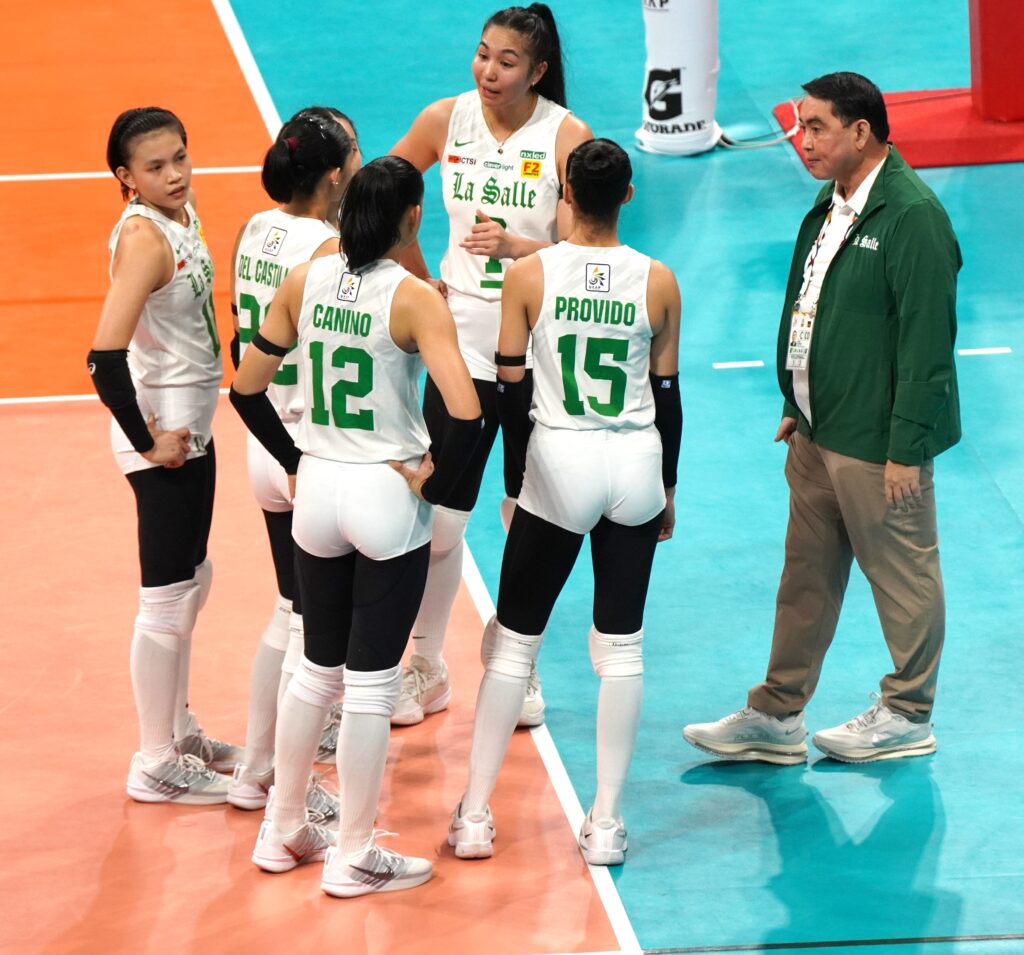
And it doesn’t come off like a script. It shows up in the details—the spacing on offense, the discipline on the block, their well-coordinated floor defense, and just the way they don’t rush even when the match speeds up.
From the second they step onto the court, with hands held tight together, swinging, you can feel the might of the legendary DLSU Lady Spikers.
You can feel the reps behind it.
The long hours.
The subtle swag.
The immutable intention.
Coach Ramil’s already looking ahead, though.
The first round is simply feeling out.
Second round?
That’s where the real battles start.
And he’s right. The league will adjust. They’ll study the timing, the tendencies, the rotations. They’ll try to slow the game down, take Nunag out of rhythm, force tougher first contacts.
That part is coming.

But right now?
La Salle feels like a team that knows exactly what it is, their Season 88 purpose.
And more importantly—
a team that can play that same way, over and over, without needing everything to go right.
Which is usually the line between a good team on a streak…
and something a little more REAL.
Something that doesn’t just chase a title.
But this is starting to look like it’s supposed to end there.
BRING ON ROUND TWO!
ANIMO LA SALLE!
ANIMO LADY SPIKERS!!!
